

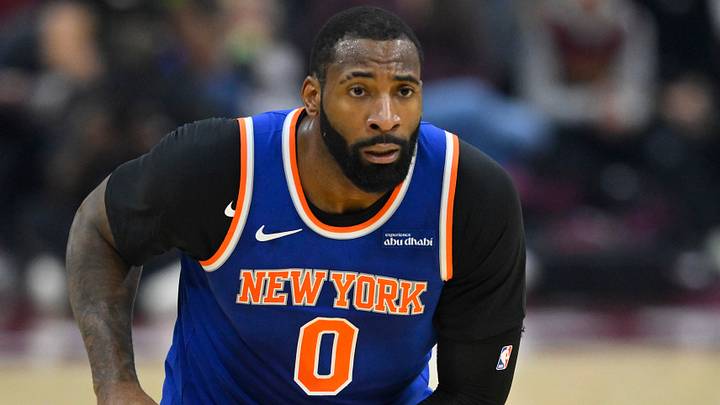
The New York Knicks cannot hope to enter the NBA playoffs with their current center rotation. Karl-Anthony Towns is a tried-and-true superstar, but filling the minutes behind him with Andre Drummond and James Wiseman opens up all sorts of turbulence. The inevitability of New York angling to land another backup big man better than both of its current options is among the NBA’s worst kept secrets.
Here’s the thing: The Knicks need teams who are willing to trade impact centers for what they can offer. But if the latest reporting is true, they shouldn’t hold their breath.
The Knicks could have a hard time finding sellers
Speaking with sources around the league for The Stein Line, Jake Fischer brings word that people in the know believe the Association's lottery reform will noticeably impact trade behavior.
"There will be less sellers than ever before," one Eastern Conference exec told Fischer. Another executive from the Western Conference posited: "Will everybody be buyers at the trade deadline?"
Under the new lottery system, teams’ shot at a top-five pick gets penalized if they have a bottom-three record. As Fischer alludes to in his piece, this doesn’t just incentivize would-be sellers to keep players who can drive winning. It could prompt cellar-dwellers to become buyers themselves.
We already saw this play out last season, in anticipation of the current lotto system. The Utah Jazz traded three first-round picks for Jaren Jackson Jr. in the middle of a tank job. The Washington Wizards acquired both Trae Young and Anthony Davis despite being a bottom-feeder.
Now that the new rules are officially in place, this behavior could become more common. For the Knicks’ sake, they better hope that isn’t true.
Fewer sellers means more bidding wars
Pulling off a deal for an impact center was always going to be an uphill battle given New York’s financial constraints, and limited asset pool.
Jose Alvarado is the Knicks’ highest-salaried trade-match option. He can’t be dealt until December 15, and is making under $4.5 million. New York also has just one first-round pick to dangle. While putting a 2033 selection on the table has value, unloading a primo asset to acquire KAT’s understudy doesn’t sit right.
Navigating these obstacles gets much harder with a tinier pool of sellers. That lowers the supply, which therefore increases demand. The Knicks have neither the incentive nor assets to win any bidding wars.
Finding a reserve center nevertheless remains easier than acquiring a starter, or someone who can crack the closing lineup. New York can also try sidestepping the competition by acting early when the vast majority of teams will remain idle until mid-December or later.
Yet, even with all of this in mind, the Knicks’ ability to upgrade from Andre Drummond and bolster the center rotation at large is contingent upon players becoming available. Once upon a time, names like Moussa Diabate, Dylan Cardwell, Zach Edey, Jaylin Williams, Yves Missi, Mo Bamba, Ryan Kalkbrenner, Karlo Matkovic, and many others seemed like possibilities.
Now, however, the Knicks can no longer be sure many of these names become available—or that they’ll have the offer necessary to acquire any of them if they do.
 Add us as a preferred source on Google