

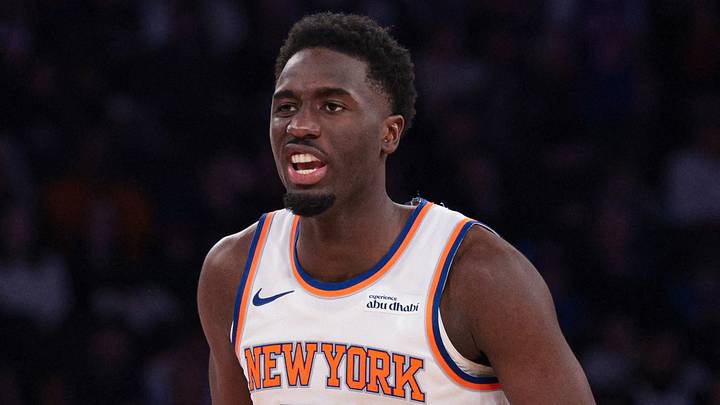
Although the New York Knicks are well-positioned to defend their NBA title this coming season, they must also be concerned with what’s awaiting them beyond 2026-27: a roster that will eventually be priced or aged out of sustainability.
The passage of time is the Association’s inevitable eroder. It cannot be stopped. Even when it looks like a contender will remain together for the foreseeable future, something predictable or unexpected happens that shortens the anticipated window.
If the Knicks wish to avoid the slow descent into non-contention that has befallen many other champions, they need to increase the urgency with which they mine and develop cost-controlled youngsters who can step in and contribute.
No one’s saying it’ll be easy. It won’t be. Most contenders fail to do it. But the Knicks front office prides itself on being a cut above the standard. If the plan is to transcend the dissolution that comes for everyone, this is the only way to reasonably do it.
The Knicks need young contributors sooner than many realize
New York’s greatest existential threat has a name. It’s called the Second Apron. The front office has so far worked around it. Without concessions of unprecedented proportions across the board, this won’t be possible much longer.
Owner James Dolan has made it clear the restrictions of the second apron are obstacles he doesn’t want to navigate. If that doesn’t change, the impending paydays for Karl-Anthony Towns, Josh Hart, and Deuce McBride will force the Knicks to break up their core no later than 2028-29.
And even that might be a stretch. Skirting the second apron in 2027-28, the season after this one, and keeping the starting five intact might be possible. But New York won’t have much depth behind them. McBride would assuredly be gone, and finagling the team-friendly salaries for both Jose Alvarado and Landry Shamet could get tough as well.
New York needs to invest in younger and cheaper talent
Despite the excitement about the (still unsigned) Tyler Nickel and (recently re-signed) Mohamed Diawara, the Knicks don’t exactly have a youthful stockpile.
Tyler Kolek appeared to be on the rise for a hot minute last season, before fading into the background. Holding out hope for Pacome Dadiet is an admirable sentiment, but it also may be a totally futile one.
Even if you believe the Knicks have worthwhile prospects, they must find a way to play them. Under 7 percent of the team’s minutes last year went to players under the age of 24. And nearly half of those younger-than-24 minutes are no longer on the roster following the exits of Jeremy Sochan, and Ariel Hukporti.
Denoting this playing-time distribution isn’t a told-you-so moment. The Knicks won a title. That means never having to say sorry.They are also free to ignore the state of their developmental projects if they only care about the next two seasons.
In the event they want the party to keep going beyond that, it’s time to start investing in more youthful fliers—not just by acquiring them, but by actually playing them.
 Add us as a preferred source on Google