

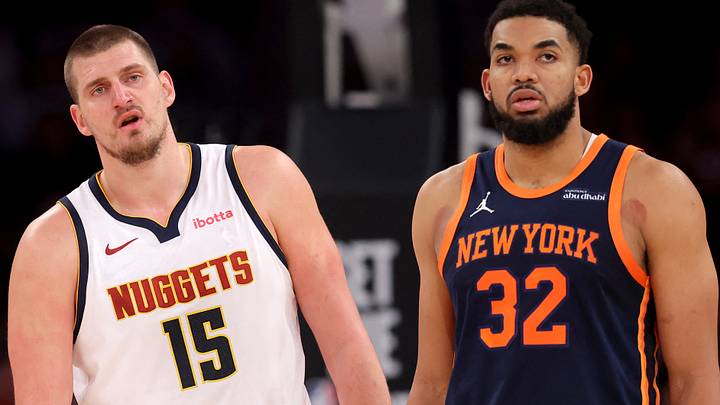
If and when Nikola Jokic leaves the Denver Nuggets, there won’t need to be an extensive organizational autopsy to understand why. He will have left because ever since winning the title in 2023, the team has failed at nearly every turn to win contract negotiations, and burned useful players and assets in the name of cutting costs.
Even as they navigate financial limitations of their own design, the New York Knicks have subjected neither Jalen Brunson nor their fans to this recurrent meld of mistakes and misreads.
If and when this era of Knicks championship contention lasts longer than Denver’s window, the avoidance of errors that have no doubt factored into Jokic not signing an extension with the Nuggets will be among the driving forces why.
The Knicks have cut costs, but not irresponsibly
Mitchell Robinson’s recent exit will be catnip for those seeking to discredit this point. But this isn’t an attempt to say the Knicks haven’t cut costs. It’s about them doing so, thus far, without burning assets or knifing into the tippy top of their roster.
Consider the Nuggets’ defining move in each of the past three offseasons:
- 2024: Letting Kentavious Caldwell-Pope, a starter, walk for nothing.
- 2025: Trading Michael Porter Jr., another starter, and a 2032 first-round pick for Cam Johnson
- 2026: Moving Peyton Watson, who outplayed Christian Braun last year, for a 2031 first-round pick from Cleveland without taking back any money in return.
All of these moves were made for the sake of cutting payroll, and ownership’s luxury-tax bill. And they all look like disasters.
KCP ended up flaming out with the Orlando Magic, and then the Memphis Grizzlies. But losing a starter for nothing is never good asset management. The other two moves represented objective talent downgrades, and one of them (MPJ for Johnson) actually cost the Nuggets a first-round pick—their last and best trade chip at the time.
New York has sidestepped anything remotely this dramatic. Robinson left for nothing, but he wasn’t a starter or, frankly, as important to the team’s title run as Porter was to Denver’s 2023 championship.
New York hasn’t burned long-term assets to juggle finances
If you want to criticize anything about the Knicks’ cap gymnastics, it is the haphazard way they have treated first-round picks. Drafting Pacome Dadiet because he was willing to sign for less than the full rookie scale doesn’t look great these days. They have also repeatedly traded off first-rounders to avoid the predetermined cap hit, including this past June.
Yet, the Knicks are making these decisions in the moment, when they know where these picks have landed. Plus, any time they’ve traded first-rounders, it hasn’t been without making an upgrade (Mikal Bridges) or amassing multiple second-rounders. New York has not used a first-round pick to salary-dump a vet since 2022…when it was angling to sign Brunson, the reigning Finals MVP.
Equally important, the Knicks have not followed the Bridges blockbuster by using swaps and available firsts for shortsighted financial games. They could have dangled swap rights in 2030 and 2032, and their outright pick in 2033. They haven’t.
The Knicks understand the power of negotiating
With all of this said, the biggest difference between the present-day Knicks and the descent of the Nuggets is the former’s ability to lock down team-friendly deals.
Nitpickers are free to throw away Brunson’s grand gesture in his latest extension. That can be chalked up to special circumstances other teams couldn’t replicate.
That’s fine. New York doesn’t need Brunson’s discount to pad its resume. It got Josh Hart to pick up his $13 million before starting his current deal to preserve flexibility. It nailed down Bridges on a sub-max extension last offseason that looks below-market now. Landry Shamet returned to New York this summer despite having richer offers elsewhere. Mohamed Diawara’s new contract is beyond team-friendly.
Heck, the Knicks’ negotiating savvy is such a given, people expect Karl-Anthony Towns to accept a discount on his next deal.
The Nuggets can’t point to any such victories. They didn’t negotiate down deals for Jamal Murray, Aaron Gordon, or Christian Braun. None of their cheaper fliers have turned into bargain-bin mainstays. When they finally tried to draw a line in the sand with Watson, they ended up losing him.
Denver is now worse for wear as a result. And with Jokic one year out from free agency, questions about his future are beginning in earnest—speculation the Nuggets have invited with repeated failures the Knicks have and continue to t him n void.
 Add us as a preferred source on Google