

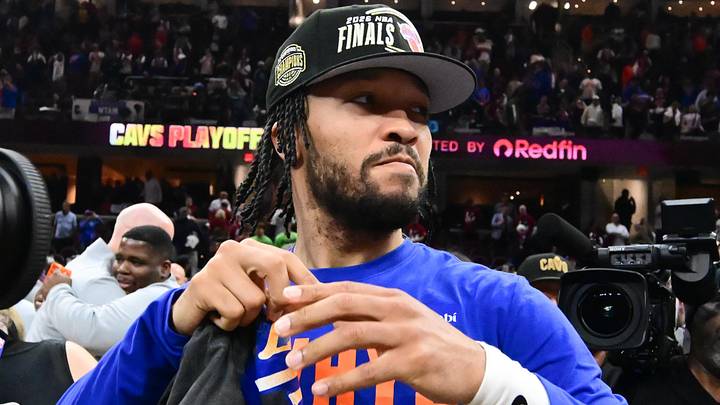
If and when the New York Knicks clinch their first title since 1973, there will be a mad dash around the league to replicate core elements of what they’ve done to build their championship squad. The NBA, after all, is a copycat league. And the biggest lesson rivals will take away from New York’s dominant run through the playoffs is the importance of depth.
Sure, it’s nice to have a top-10 superstar earning well below market value who subsists on the type of shots not even Victor Wembanyama can delete from existence. The ability to deploy five-out lineups is cool, too. Ditto for having someone like OG Anunoby, the mega star of non-stars.
The list goes on.
Still, the Knicks’ march toward history is largely powered by their capacity to adapt. That knack for rolling with the punches, for experimenting, is only possible because they’ve maximized as many of their active roster spots as humanly possible. You better believe squads around the Association will now be trying harder than ever to do the same.
The Knicks have needed to lean on just about everyone to get here
New York’s starting five of Anunoby, Jalen Brunson, Karl-Anthony Towns, Mikal Bridges and Josh Hart soaks up a lion’s share of the team’s attention. After them, Deuce McBride and Mitchell Robinson were considered the most reliable constants entering this season.
Little consideration was paid to everyone else. Some extolled the roster’s added depth compared to years past, but it was seldom painted as a defining strength. Even leading into this season’s trade deadline, there was serious debate over what and how much they needed to tack onto this roster.
At various points throughout the year, though, the Knicks have needed to call virtually everyone’s number.
Rookie Mohamed Diawara provided admirable minutes on the wings this past winter while the Knicks navigated injuries. Tyler Kolek was a hero right around the NBA Cup. Landry Shamet emerged as one of the league’s best bargains in no time at all. Jordan Clarkson exited the rotation, only to return with a vengeance later in the year, including during the postseason, as a try-hard defender and offensive rebounder.
These Finals are a billboard for depth themselves. Jose Alvarado, who the Knicks acquired at the deadline, went from in the rotation to on the outskirts of it to closing out the greatest comeback in playoff history over Bridges.
Heck, with Towns battling foul trouble in Game 4, New York needed to dust off Ariel Hukporti and Jeremy Sochan. Don’t forget about the time Anunoby missed with a strained right hamstring, either. He might win Finals MVP, and yet the Knicks were able to paper over his absence with steady doses of Clarkson, McBride, and Shamet.
Other NBA teams will take notice of the Knicks’ depth
Nobody should be surprised when the rest of the league looks to follow in the footsteps of the Knicks. Really, the Knicks themselves have followed in the footsteps of the Oklahoma City Thunder and Indiana Pacers before.
Both squads reached the 2025 NBA Finals while dazzling with their ability to go nine or more deep during a time of year in which New York usually leaned on six or seven names under former head coach Tom Thibodeau. Last year, seven Knicks players cleared 15 minutes in a single postseason tilt more than once. That number is up to 10 now.
This isn’t a one-off, either. It’s potentially part of a larger trend. The season is long. Champions have to play over 100 games. Injuries pile up. We are seeing teams gradually extend their rotations as a result. Just take a look at the number of players who have cleared 15 minutes in at least five postseason games the past few years:
- 2026: 166
- 2025: 162
- 2024: 158
Granted, this could be nothing more than a blip. Postseasons before 2024 are all over the place. But when three of the past four NBA Finals participants routinely stretched nine or more capable players deep, other teams are liable to act on it.
For their part, the Knicks are no longer one of those squads. Given how they got here, given all they’ve done, give what they’ve become, they are now among the standard-bearers against which everyone else will build their rosters.
 Add us as a preferred source on Google